
DTF vs Screen Printing: Which Is Better for Your Shirts?
Choose screen printing for larger runs of the same design in a few solid colors, where it gets more efficient as quantity grows and delivers a soft, classic print. Choose DTF printing for full-color artwork, gradients, small runs, and orders with many names or designs.
- DTF vs Screen Printing: The Short Answer
- How DTF Printing Works
- How Screen Printing Works
- Look and Feel: Screen Print vs DTF
- Colors, Detail and Artwork
- DTF vs Screen Printing Durability
- Fabrics: What Each Method Prints On
- Order Size, Setup and What Drives Cost
- Turnaround for DTF and Screen Printing
- Screen Print Transfers vs DTF Transfers
- Embroidery vs Screen Printing vs DTF
- When to Choose DTF vs Screen Printing: A Decision Guide
- Frequently asked questions
DTF vs Screen Printing: The Short Answer
Our verdict: neither method is better across the board. Screen printing is the right call when you are printing the same design on a larger run of garments in one to a few solid colors: it gives a soft, durable, classic print and becomes more efficient the more pieces you order. DTF (direct-to-film) printing is the right call when your artwork is full color, has gradients or photos, when the run is small, or when every shirt needs a different name, number or design. Many of our customers use both: screen printing for the big event tee, DTF for the staff shirts with individual names.
Here is how DTF vs screen printing compares side by side, from the perspective of the shop that runs both every day.
| Factor | Screen printing | DTF printing |
|---|---|---|
| How it works | Ink pushed through a mesh screen, one screen per color | Design printed on film, coated with adhesive powder, then heat pressed |
| Best artwork | Bold logos and text in a few solid colors | Full color, gradients, photos, fine detail |
| Feel on the shirt | Soft to slightly raised; very soft with water-based inks | Smooth, thin, flexible layer on top of the fabric |
| Color matching | Excellent; inks are mixed to match brand colors | Very good; printed from CMYK plus white, close match to most colors |
| Setup | Screens made for each color, so more setup per design | Very little setup per design |
| Order size sweet spot | Larger runs of one design; more efficient as quantity grows | Small runs, sampling, and many different names or designs |
| Fabrics | Best on cotton and blends; polyester needs special inks | Cotton, polyester, blends and many other fabrics |
| Durability | Very durable when cured and cared for properly | Very durable when pressed and cared for properly |
| Turnaround | Fast turnaround: most orders are ready in 7–10 business days, depending on order size. | Same production window; DTF is also sold as ready-to-press transfers |
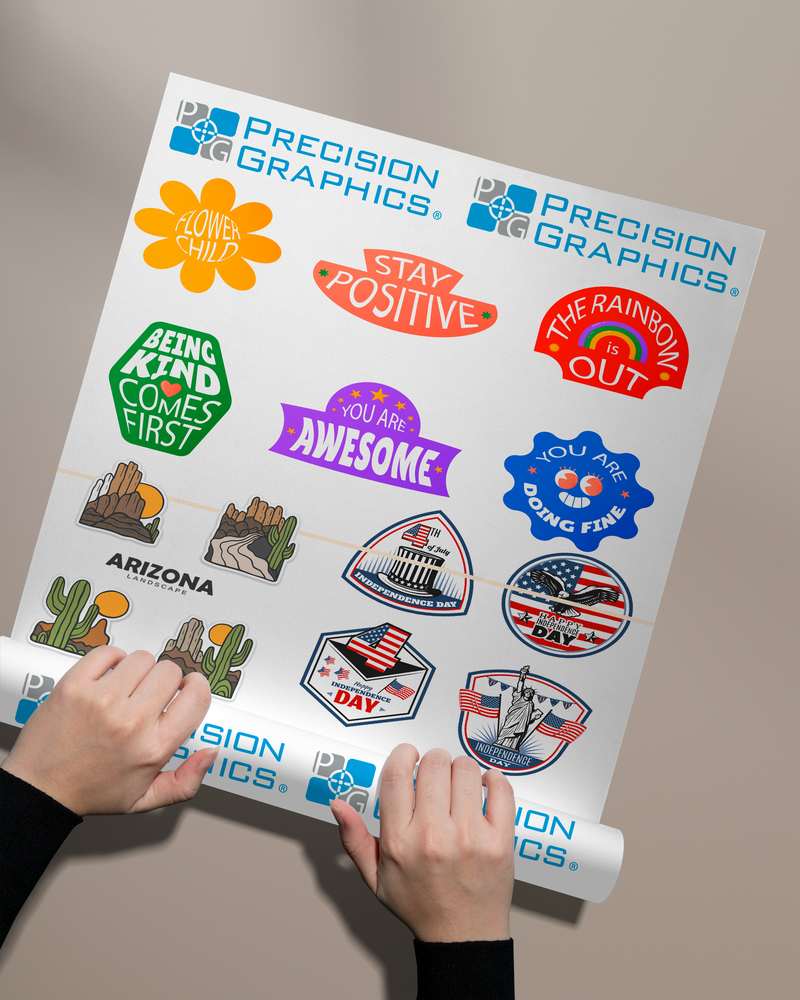
 Custom Screen PrintingBold, soft prints that scale up well on larger runs.DTF PrintingFull-color, detailed prints on almost any fabric.
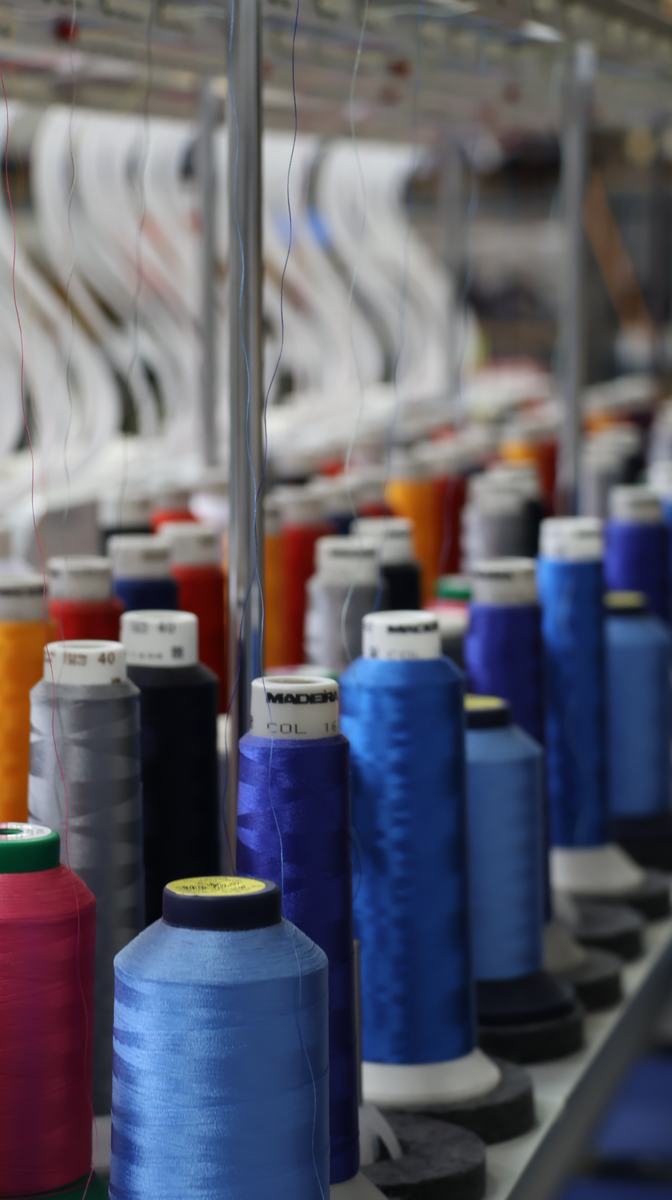 Custom EmbroideryStitched logos for polos, jackets and hats.
How DTF Printing Works
DTF stands for direct-to-film. Instead of printing on the shirt, the printer lays the design onto a clear PET film. The process looks like this:
- Print the film. A specialized printer lays down the color image with pigment inks, then a layer of white ink behind it. The white layer is what lets the colors stay bright on black and colored garments.
- Apply adhesive powder. While the ink is still wet, the film is coated with a fine hot-melt adhesive powder that sticks only where there is ink.
- Cure the powder. The film is heated so the powder melts into a smooth adhesive layer. At this point the print is a finished transfer that can be stored and pressed later.
- Heat press the transfer. The film is placed on the garment and pressed with heat and pressure, which bonds the adhesive into the fabric.
- Peel and finish. The film is peeled away, leaving the design on the garment. Many shops, including ours, give it a second short press to set the finish.
Because nothing has to be built for each color, DTF handles a design with three colors and a design with three hundred colors the same way. That is the core reason it shines for photographic art, gradients and small runs. You can see examples and garment options on our DTF printing page.
How Screen Printing Works
Screen printing is the classic method behind most event tees, team shirts and band merch. Each color in the design gets its own screen:
- Separate the artwork. The design is split into one layer per ink color.
- Burn the screens. Each mesh screen is coated with light-sensitive emulsion and exposed with that color's layer, leaving open mesh only where ink should pass through.
- Mix and match inks. Inks are mixed to match your brand colors.
- Print. Shirts are loaded on a press and a squeegee pushes ink through each screen in turn. On dark garments, a white underbase is printed first so the colors pop.
- Cure. The printed garments travel through a conveyor dryer that heats the ink so it bonds to the fibers.
The setup work (separations, screens, registration and ink mixing) happens once per design, and then each additional shirt prints quickly. That is why screen printing gets more efficient as the quantity grows. Learn more about our screen printing services, or if you are local, about screen printing in Tempe.
Look and Feel: Screen Print vs DTF
This is where most people notice the difference when they compare a screen print vs DTF shirt in hand.
Screen printing
A screen print sits in and on the fibers. Plastisol ink, the most common type, has a smooth, slightly raised feel and a bright, opaque look. Water-based and discharge inks soak into the fabric for a very soft feel that you can barely notice, which is popular for retail-style tees on light and cotton-rich garments. Screen printing also unlocks specialty finishes like puff ink, metallic ink and high-density prints.
DTF printing
A DTF print is a thin, flexible layer bonded to the surface of the fabric. Modern DTF is much softer and stretchier than older heat transfers, and on small and medium-size designs most wearers do not notice it. On very large designs with big solid areas, DTF can feel a little smoother and heavier than a soft screen print and breathes less, simply because more of the shirt is covered. Good artwork prep helps: we can knock out large solid backgrounds or use distressed textures so the shirt fabric shows through.
If softness matters most and your design has only a few colors, ask about water-based screen printing on a cotton tee. If detail and color matter most, DTF is usually the better pick.
Colors, Detail and Artwork
Artwork is often the deciding factor in screen printing vs DTF.
- Number of colors: each color in a screen print needs its own screen, so a five-color design means five screens. DTF prints every color in a single pass, so color count does not change the setup.
- Gradients and photos: screen printing can reproduce gradients with halftone dots and simulated process printing, which takes skilled separations. DTF reproduces gradients, shadows and photographs directly.
- Fine detail and small text: DTF holds thin lines and small lettering very well. Screen printing handles fine detail too, but extremely fine lines can fill in or drop out depending on the mesh and ink.
- Brand color matching: screen printing inks are mixed to a target color, which is the most reliable way to match a specific brand color on a large order. DTF matches most colors closely, and we will flag any color that may shift on your digital proof.
- Specialty effects: puff, metallic and other specialty inks are a screen printing strength.
For best results with either method, send vector artwork (AI, EPS, PDF or SVG). For DTF, a high-resolution PNG with a transparent background also works well. We review every file and send a digital proof before production.
DTF vs Screen Printing Durability
Durability is the question we hear most, and the honest answer is that both methods are durable when they are done correctly and the garment is cared for. A properly cured screen print and a properly pressed DTF transfer will both outlast many casual prints people are used to seeing. What separates a long-lasting print from one that fades or cracks is usually process and care, not the method.
What affects screen print durability
- Curing: ink that is under-cured can wash out or crack early. Professional conveyor dryers solve this.
- Ink thickness: heavy, thick ink layers can crack over time on stretchy fabrics.
- Fabric: screen prints bond best with cotton and cotton blends.
What affects DTF durability
- Pressing: the right heat, pressure and time are essential for the adhesive to bond fully. Under-pressed transfers can lift at the edges.
- Quality of film, ink and powder: professional materials stay flexible; low-grade transfers can feel stiff and crack.
- Stretch: DTF stretches well, but repeatedly over-stretching a large solid area can stress it.
Care tips for both
- Turn garments inside out before washing.
- Wash in cold or warm water on a gentle cycle with mild detergent; skip bleach and fabric softener.
- Tumble dry on low or hang dry.
- Do not iron directly over the print.
- Always check the care details for the specific garment.
Fabrics: What Each Method Prints On
Fabric compatibility is one of the clearest differences in DTF printing vs screen printing.
| Fabric or item | Screen printing | DTF printing |
|---|---|---|
| 100% cotton tees | Excellent; the classic match | Excellent |
| Cotton/poly blends | Very good | Excellent |
| 100% polyester and performance shirts | Possible with low-bleed inks and lower cure temperatures | Excellent; a go-to for athletic and moisture-wicking fabrics |
| Fleece hoodies and sweatshirts | Very good | Very good |
| Nylon jackets and bags | Possible with special inks and additives | Good on many nylon items |
| Hi-vis shirts | Possible with the right inks | Very good for full-color logos |
| Hats | Limited; usually as a transfer | Good on many hat fronts |
| Polos and dress shirts | Possible, but often embroidered instead | Good for detailed logos |
Polyester can be tricky for screen printing because dye from the fabric can migrate into the ink when heated, which tints a white print. Low-bleed inks reduce that risk, but DTF avoids it with a lower-temperature press, which is why we often recommend DTF for performance shirts and for hi-vis apparel. For hats, see our guide to types of hats to match the decoration to the cap.
 Custom T-ShirtsScreen printed or DTF, in any style and color.
 Custom HoodiesFleece hoodies that take both methods well.
 Performance ShirtsPolyester athletic tees, where DTF shines.
Order Size, Setup and What Drives Cost
We do not publish price comparisons because cost depends on the item, the quantity and the decoration. What we can explain is how each method's setup shapes which one makes more sense for your order.
Screen printing: more setup, more efficient as quantity grows
Every screen print job starts with separations, screens and ink mixing for each color. That setup is the same whether you print a small stack of shirts or a large run, so it is spread across more pieces as quantity grows. For a big event, a school, a company outing or a fundraiser where everyone gets the same design, screen printing is usually the efficient choice. Fewer colors means fewer screens, so simplifying a design to one or two colors can make a meaningful difference on a large order.
DTF: minimal setup per design
DTF needs very little setup per design, so it suits small runs, samples, test designs and orders where every shirt is different. Personalized names and numbers, multi-location designs with many colors, and mixed orders with several different designs are DTF territory. It is also a great way to produce a first batch of a new design before committing to a large screen printed run.
Things that change cost for both methods
- The garment itself (style, brand tier, fabric and color).
- The number of print locations (front, back, sleeve, neck).
- Print size.
- For screen printing, the number of ink colors in each location.
- Quantity.
The quickest way to compare both methods for your exact design is to Request a Quote and tell us your quantity and artwork. We will tell you which method we recommend and why.
Turnaround for DTF and Screen Printing
Fast turnaround: most orders are ready in 7–10 business days, depending on order size. That window applies to both screen printing and DTF printing. If you have an event, tell us your date and we will confirm it on your quote.
A few things help any order move smoothly: send final artwork early, confirm sizes and quantities before you approve the proof, and choose garment styles and colors that are widely stocked. Mixed orders that combine a screen printed design with DTF names or with embroidered logos are common, and we schedule them together.
Screen Print Transfers vs DTF Transfers
If you press your own shirts, or you need prints to apply later, the choice becomes screen print transfers vs DTF transfers. Both arrive as printed sheets that you heat press onto garments, but they are made differently.
- Screen print transfers (often called plastisol transfers) are screen printed onto release paper in reverse, partially cured, and then pressed onto the garment. They carry the same strengths and limits as screen printing: excellent for one to a few spot colors and efficient on larger quantities of the same design, but each color still needs a screen.
- DTF transfers are printed on film in full color with a white layer and adhesive already applied. Any number of colors, gradients and fine detail are possible, many different designs can share one sheet, and they press onto cotton, polyester and blends.
For most small businesses, teams and decorators who want full-color designs without screens, DTF transfers are the more flexible option. If you want to press them yourself, see our DTF transfers ready to press. If you would rather we handle everything, we print and press the garments in-house.
Pressing your own transfers? Use a heat press rather than a household iron, follow the time, temperature and pressure on the instructions, and do a test press on a spare garment first.
Embroidery vs Screen Printing vs DTF
Many buyers are actually choosing among three methods, not two. Embroidery stitches your logo with thread, giving a raised, textured, premium look that holds up very well on heavier garments.
| Method | Best for | Look | Watch out for |
|---|---|---|---|
| Screen printing | Larger runs of tees, hoodies and sweatshirts with a few colors | Bold, soft or slightly raised ink | Setup for each color; less suited to photos |
| DTF printing | Full color, small runs, names and mixed designs on many fabrics | Smooth, vivid, detailed | Very large solid areas feel heavier |
| Embroidery | Polos, jackets, hats, bags and corporate apparel | Raised, textured, premium thread | Very small text and gradients do not translate to thread |
As a rule of thumb, we screen print or DTF print tees, sweatshirts and hoodies, and we embroider polo shirts, outerwear and hats. For a deeper look at the stitched option, read our embroidery vs screen printing FAQ.
When to Choose DTF vs Screen Printing: A Decision Guide
Use this table to match your project to the right method. If your project fits more than one row, we will recommend the best fit on your quote.
| Your project | Our recommendation | Why |
|---|---|---|
| Large event, school or company run with the same design | Screen printing | Setup is spread across many pieces; soft, durable, classic print |
| Logo in one to three solid brand colors | Screen printing | Mixed inks give the most reliable brand color match |
| Full-color art, gradients or a photo | DTF printing | Prints every color in one pass, with no screens |
| Small team or staff order | DTF printing | Minimal setup per design |
| Individual names or numbers on each shirt | DTF printing | Each piece can be different |
| Polyester performance or athletic wear | DTF printing | Lower press temperature and strong results on synthetics |
| Softest possible print on cotton tees | Water-based screen printing | Ink soaks into the fabric |
| Puff, metallic or other specialty inks | Screen printing | Specialty inks are a screen printing strength |
| Pressing shirts yourself | DTF transfers | Full-color sheets ready to press |
| Polos, jackets and hats for a polished look | Embroidery | Raised, premium, long-lasting stitching |
Three quick questions to decide
- How many colors and how much detail? A few solid colors leans screen printing; full color, gradients or fine detail leans DTF.
- How many pieces of the same design? More of the same design leans screen printing; small runs and lots of variation lean DTF.
- What fabric? Cotton works great with either; polyester and mixed materials lean DTF.
Still on the fence? That is normal, and it is exactly what we help with every day. Browse more decoration and apparel guides on our blog, or send us your artwork and we will recommend a method. Planning a holiday event? Our ugly Christmas sweater party ideas guide shows how matching shirts fit into the plan.
Not sure whether to choose DTF or screen printing?
Send us your artwork, garment choice and quantity, and we will recommend the best method and show you a digital proof before anything is printed. Request a Quote to get started.
Request a QuoteCall 480-967-7015Fast turnaround: most orders are ready in 7–10 business days, depending on order size. We ship anywhere in the U.S., and local customers can pick up at 1715 W. 4th Street, Tempe, AZ 85281.
Frequently Asked Questions
Is DTF better than screen printing?
Not across the board. DTF is better for full-color artwork, gradients, small runs and personalized names. Screen printing is better for larger runs of the same design in a few solid colors, specialty inks and the softest feel on cotton.
Which lasts longer, DTF or screen printing?
Both are very durable when done correctly. A properly cured screen print and a properly pressed DTF transfer both hold up well over many washes. Washing inside out in cold or warm water and tumble drying on low helps either one last; check care details for each garment.
Does DTF printing crack or peel?
Professional DTF transfers pressed with the correct heat, pressure and time stay flexible and bonded. Cracking or peeling usually comes from low-grade materials, under-pressing, ironing directly on the print or repeated over-stretching of a large solid area.
What is the difference between screen print transfers and DTF transfers?
Screen print transfers are screen printed onto release paper, so each color needs a screen and they suit simple designs in larger quantities. DTF transfers are printed on film in full color with adhesive already applied, so any number of colors and many designs can be produced without screens. See our ready-to-press DTF transfers.
Which costs less, DTF or screen printing?
It depends on the item, quantity and decoration. Screen printing gets more efficient as quantity grows because the screen setup is spread across more pieces, while DTF has very little setup per design. The best way to compare is to Request a Quote with your design and quantity.
Can you screen print on polyester?
Yes, with low-bleed inks and lower cure temperatures to reduce dye migration, which can tint the print. For many polyester performance shirts, we recommend DTF printing because it presses at a lower temperature and handles full-color designs easily.
Is embroidery or screen printing better?
Embroidery is best for polos, jackets, hats and a premium corporate look. Screen printing is best for tees, hoodies and sweatshirts, especially larger runs with bold designs. Read our screen printing vs embroidery FAQ for more detail.
How long do DTF and screen printed orders take?
Fast turnaround: most orders are ready in 7–10 business days, depending on order size. If you have an event, tell us your date and we will confirm it on your quote. We ship anywhere in the U.S., and local customers can pick up at our Tempe shop.
