
¿Prefiere español? Serigrafía en español →
Screen PrintingCustom Screen Printed T-Shirts, Hoodies And Apparel, Printed In Our Tempe Shop Since 1981
Screen printing is the classic way to put a logo or design on shirts: ink is pushed through a mesh stencil, one screen per color, then heat cured so it bonds to the fabric. Precision Graphics has screen printed t-shirts, hoodies, team shirts, work shirts and tote bags at 1715 W. 4th Street in Tempe since 1981, serving the Phoenix area and shipping anywhere in the U.S. Every order starts with a digital proof.
Made for businesses
What We Screen Print
Screen printing works on far more than t-shirts. These are the garments and items customers bring to us most, from a first run of company tees to a full season of team apparel. Each card opens the collection so you can compare styles, fabrics and colors before you ask for a quote. Browse all printed apparel or ask us for a recommendation.

Screen Printed T-Shirts
Cotton, blend and soft ringspun tees with a chest logo, a full-front design or a big back print. T-shirts are the core of most screen printing orders.
Most RequestedFront And BackShop Custom T-Shirts →
Screen Printed Hoodies
Pullover and full-zip hoodies with bold front or back prints. Fleece gives ink a solid base for designs that need to be seen across a room or a field.
FleeceBack PrintsShop Custom Hoodies →
Crewneck Sweatshirts
Classic crewnecks with a chest mark, an arched name or a full-front graphic, a favorite for schools, clubs and brands that want a retail look.
Cool WeatherRetail LookShop Crewnecks →
Long Sleeve Tees
Long sleeves add a print location most tees do not have: a name, a web address or a short phrase running down the arm.
Sleeve PrintsLayeringShop Long Sleeve Tees →
Tank Tops
Unisex and fitted tanks for gyms, fun runs, summer camps and trips. Screen printing keeps a bold design light enough for hot days.
SummerGyms And RacesShop Custom Tank Tops →
Team And League Shirts
Practice shirts, fan shirts and coaches' shirts in team colors, with player names and numbers planned with you so every piece is right.
TeamsNames And NumbersShop Team Shirts →
Work And Crew Shirts
Company logos on the chest and a large mark across the back for crews who are seen from behind on job sites, routes and service calls.
CrewsBack LogoShop Work Shirts →
Bulk T-Shirt Orders
Hundreds or thousands of the same design in mixed sizes and colors, printed together and packed by size, team or location.
Large RunsPacked By SizeSee Bulk T-Shirts →
Printed Tote Bags
Flat, sturdy canvas is one of the best surfaces for screen printing. Totes work as conference bags, retail bags and event giveaways.
CanvasEventsShop Tote Bags →
DTF For Small Full-Color Runs
For small runs, many customers choose DTF for its light feel, full color and fine detail. Photos and gradients print without screens.
Small RunsFull ColorSee DTF Printing →
Embroidery In The Same Shop
Stitched logos on polos, caps and jackets to pair with your printed tees, so staff wear and event shirts share one look and one quote.
Polos And CapsSame ShopSee Custom Embroidery →Screen Printing Vs DTF Vs Embroidery: When Each One Wins
We run screen printing, DTF printing and embroidery under one roof in Tempe, so we have no reason to push one method over another. Here is how we decide which one fits each item on your order, and you will see the reasoning on your quote.
Bold Logos In Solid Colors
Logos and lettering in a few solid colors are what screen printing does best: bright, opaque ink and crisp edges, piece after piece.
Screen PrintMany Shirts, One Design
Once the screens are set up, every shirt prints the same way, so screen printing becomes more efficient as the quantity grows.
Screen PrintBig Back Prints
Large designs across the back of tees, hoodies and crew shirts are a natural fit for screen printing on cotton and fleece.
Screen PrintSmall Runs And One-Offs
For small runs, many customers choose DTF for its light feel, full color and fine detail, since there are no screens to set up.
DTFPhotos And Gradients
Photographs, soft fades and many-color artwork in small quantities usually print best as DTF. We tell you when that is the case.
DTFPolos, Caps And Jackets
Textured, structured or premium garments usually look best with an embroidered logo instead of ink.
EmbroideryNames And Numbers
Player names and numbers can be added to each team shirt. We plan the method and the spelling list with you before production.
TeamsMixed Orders
Printed event tees, a few full-color pieces and stitched staff polos can all go on one quote with the same logo.
One QuoteOrdering Screen Printing In Five Steps
Tell Us What You Need
Call 480-967-7015, send a quote request or stop by the Tempe shop with the garments, colors, sizes, quantities and print locations you have in mind.
Send Your Logo
Email any file you have. Our art team reviews it, separates the colors and sizes the design for each print location.
Approve Your Digital Proof
See your screen print before it is made. Nothing is produced until you approve it.
Production
Fast turnaround: most orders are ready in 7–10 business days, depending on order size. We confirm the exact date on your quote.
Pickup Or Shipping
Pick up in Tempe or ship anywhere in the country.
Who We Screen Print For
Screen printing customers range from a five-person startup to a district-wide event. We print team shirts for leagues and coaches, school shirts for PTOs and clubs, church shirts for ministries and events, family reunion shirts, work shirts for crews and corporate apparel for companies, plus merch for brands, bands and nonprofits.
Why Order From Precision Graphics
Screen Printing Services For Businesses, Teams And Events
Most screen printing orders have the same shape: one design, many garments, a date. A company needs crew shirts before a busy season, a league needs practice shirts before the first game, a nonprofit needs walk shirts before race morning. We set up the screens once, print the whole run on our presses in Tempe and pack it the way you will hand it out, by size, by team or by location.
Send one list with the garment, colors, sizes and print locations, plus your art and your date. Fast turnaround: most orders are ready in 7–10 business days, depending on order size. Tell us your date and we will confirm it on your quote. Pick up at 1715 W. 4th Street, Tempe, AZ 85281, or we ship to your office, school or event site anywhere in the U.S.
Precision Graphics has supplied branded merchandise to Arizona businesses since 1981, and we ship screen printed t-shirts, hoodies, team shirts and tote bags anywhere in the United States. Order any quantity from 1 to 10,000+ (orders under 12 pieces include a $30 small-order fee), so tell us your quantity and date and we will show you every option.
The Complete Guide To Screen Printing
What Screen Printing Is
Screen printing is a printing method that pushes ink through a fine mesh screen onto a garment. Part of the mesh is blocked by a stencil, so ink passes through only where your design is open. Each color in the design gets its own screen, and the colors are printed one after another, lined up so they come together as the finished image. Once every color is down, the garment passes through heat that cures the ink so it bonds to the fabric.
That simple idea is why screen printing has been the standard way to decorate t-shirts for decades. A layer of ink sits on or in the fabric, colors are solid and bright, and once the screens are set up the same design can be printed on piece after piece with very consistent results. When people picture a classic printed tee, a concert shirt or a team shirt with a big number on the back, they are usually picturing screen printing.
Screen Printing, Silk Screen Printing And Screen Print: One Process
You will see this process called screen printing, silk screen printing, silk screening, screen print and serigraphy. They all describe the same thing. The name silk screen comes from the early days, when the mesh stretched across the frame was woven silk. Modern screens use synthetic mesh, usually polyester, because it holds tension and stands up to ink and cleaning far better, but the older name stuck.
So if you are searching for silk screen t-shirt printing, t-shirt screen printing, screen printing silk screening or simply a screen print, you are looking for the same service described on this page. For a deeper look at the history and the terms, read our guide what is screen printing, and if you are searching locally, see silk screen printing near me.
How Screen Printing Works, Step By Step
Every screen printing order follows the same basic path. First the artwork is reviewed and prepared, and the design is separated into one layer per ink color. Each layer is output as a film positive, a clear sheet with that color shown in solid black. A screen is coated with a light-sensitive emulsion, the film is placed against it and the screen is exposed to light. Where the film blocked the light, the emulsion washes out, leaving an open stencil in the exact shape of that color.
The screens are then mounted on the press and lined up so each color lands in the right place, a step called registration. Ink is flooded across the screen and pulled through the open areas with a squeegee, one color at a time. On dark garments a white base layer is printed and briefly flash dried first so the colors on top stay bright. Finally the garments travel through a heated dryer that cures the ink, and each piece is checked, folded and packed.
Artwork And Color Separations
Good screen printing starts with good art. Vector files such as AI, EPS, PDF or SVG are ideal because they scale cleanly to any print size. High-resolution PNG or JPG files can work too, and if all you have is a low-resolution logo, a sketch or a photo of an old shirt, send it anyway. Our art team will tell you what the file needs and can clean up or rebuild artwork when that is the best route.
Color separation is the step most customers never see. We split your design into one layer for each ink, decide where a white underbase is needed and set the print size for each location. Simple logos separate into a handful of solid spot colors. Detailed, multi-color illustrations may use halftones, tiny dots that blend to create shading, so the design reads correctly from a few feet away. You see the result on your digital proof before anything is printed.
Spot Color And Simulated Process
Most screen printing orders use spot color: each ink is mixed as a solid color and printed through its own screen. Spot color is ideal for logos, lettering and graphics with clear shapes, and it gives the bold, opaque look people associate with a classic printed tee. Because every ink is its own screen, a logo with fewer colors is quicker to set up than one with many.
Simulated process is a technique for full-color artwork with shading, such as an illustration or a design with soft gradients. A set of chosen inks is printed with halftone dots that blend visually into a wide range of tones. It takes more art preparation and more screens, so it suits larger runs of a detailed design. For a few pieces of a photo-style design, DTF is usually the better fit, and we will say so on your quote.
Screen Printing Inks: Plastisol And Water-Based
Plastisol is the workhorse ink of t-shirt screen printing. It sits on top of the fabric, covers well on dark garments and gives bright, opaque colors, which is why it is the usual choice for team shirts, work shirts and event tees that are washed every week. Water-based ink soaks into the fibers instead of sitting on top, so the print feels softer and blends with the fabric, especially on light-colored cotton and cotton blends.
We pick the ink for each job based on the garment, the colors in the design and the feel you want, and we explain the choice on your quote. If you have a preference, tell us at the start. Ink colors are mixed to match your brand colors as closely as possible, and every ink is listed on the proof so you can approve it before the run starts.
Printing On Dark Garments
Ink is slightly translucent, so a red printed straight onto a black shirt can look dull or shift in color. To keep colors bright on black, navy, maroon, forest green and other dark garments, we print a white underbase first, flash dry it, then print the colors on top. The underbase is its own screen, which is why a design on a dark shirt can need one more screen than the same design on a white shirt.
On light garments, colors are usually printed directly onto the fabric. Heather and tri-blend fabrics have their own character because the mixed fibers show through slightly, giving a soft, worn-in look. If an exact color match matters on a dark or heather shirt, tell us early so we plan the underbase and ink choices with that in mind.
Choosing Garments For Screen Printing
Almost any garment fabric can be screen printed, but some give better results than others. Smooth, tightly knit cotton and cotton-polyester blend tees print the crispest detail and are the most common choice. Ringspun cotton feels softer and holds fine lines well. Heavyweight cotton tees give a sturdy, classic look for work and retail. Fleece hoodies and crewnecks take ink well on the body, and canvas totes are an excellent printing surface.
Performance polyester shirts are popular for teams, races and outdoor work, and they can be screen printed with inks suited to synthetic fabric. Some polyester garments react to heat or let dye move into the ink, so tell us which garment you want and we will confirm the best approach. Not sure where to start? Browse custom t-shirts and custom hoodies, or ask us for two or three suggestions in different weights and feels.
T-Shirt Screen Printing
T-shirts are the heart of screen printing. A classic layout is a left chest logo on the front with a large design across the back, but full-front prints, sleeve prints and small prints below the collar are all common. Most t-shirt screen printing orders mix several sizes and sometimes several shirt colors, and we print and pack each size run so handing them out is easy.
Silk screen t-shirt printing works for company tees, event shirts, fundraisers, school spirit shirts, family reunions and merch for brands and bands. If you need a lot of the same design, screen printing is usually the most efficient method per shirt. For large tee orders, see bulk custom t-shirts, and to compare tee styles, visit custom t-shirt printing.
Hoodies, Crewnecks And Long Sleeves
Fleece and heavier knits give screen printing a solid base, so hoodies and crewneck sweatshirts carry big front or back designs well. Pullover hoodies have a front pocket, which shapes where a front print can sit, while full-zip hoodies split the front and usually take a left chest logo with a large back print. Long sleeve tees add sleeve printing, a favorite for names, websites or a short phrase running down the arm.
Cooler-weather orders often follow a summer tee order with the same artwork, so your design stays consistent across the year. See custom crewneck sweatshirts and custom long sleeve t-shirts for the styles we print most.
Team, School And League Shirts
Team shirts are one of the most common reasons people look for screen printing. A season of practice shirts, fan shirts for parents and coaches' shirts often share one design printed in team colors. Player names and numbers can be added to each piece, and we plan that part of the order with you so every name is spelled correctly and every size is right.
Schools, PTOs, booster clubs and youth leagues use screen printing for spirit wear, field days, clubs and fundraisers. Send the design your group uses, or an idea you want developed, and we print it in your colors. Browse custom team shirts, custom school shirts and school spirit wear for ideas.
Business, Uniform And Crew Shirts
For businesses, screen printing is a practical way to put a logo on staff shirts, crew tees and event giveaways. A left chest logo with a large back print works well for crews who are seen from behind, such as landscapers, movers and contractors. Restaurants, coffee shops and breweries often print staff tees that double as merch for customers.
Because your art, ink colors and placements stay on file after the first run, reordering for new hires is simple. Many companies pair screen printed tees with embroidered polos and caps for managers and front-desk staff. See custom work shirts and corporate apparel for both sides of a uniform program.
Event, Fundraiser And Reunion Shirts
Event shirts are where screen printing shines: one design, many shirts, a fixed date. Charity walks, races, festivals, church events, conferences and family reunions all fit this pattern. A front design with a back list of sponsors or the year is a common layout, and printing the whole run together keeps every shirt identical.
The key with event shirts is planning backward from the date. Collect sizes early, send final art and sponsor logos together and leave room for the proof. Fast turnaround: most orders are ready in 7–10 business days, depending on order size. Tell us your date and we will confirm it on your quote. For more ideas, see custom family reunion shirts and custom church shirts.
Tote Bags And Other Printed Items
Canvas and cotton tote bags are one of the best surfaces for screen printing: flat, sturdy and absorbent. Printed totes work as conference bags, retail bags, giveaways and merch. Drawstring bags are another popular printed item for schools, teams and events.
Beyond shirts and bags, we screen print tank tops, sweatpants and other apparel from our catalog. Browse custom tote bags and custom tank tops, or ask whether a specific item is a good candidate for screen printing before you buy it.
Print Locations And Print Sizes
The most common screen print locations are the left chest, full front, full back, upper back below the collar, sleeves and the back of the neck. Each location is a separate setup with its own screens, so a two-location design is planned as two prints. We size each design to the garment and the location, and youth and adult sizes in the same order may use different print sizes so the design looks right on every shirt.
When you request a quote, tell us where you want each design and roughly how big you picture it. If you are unsure, we will suggest a layout that suits the garment and show it on the proof. Seams, pockets, zippers and hoods all shape what is possible, and we plan around them before anything is printed.
Order Size: Small Runs And Large Runs
Screen printing works for any quantity (orders under 12 pieces include a $30 small-order fee). For small runs, many customers choose DTF for its light feel, full color and fine detail. Because every ink color needs a screen and a press setup, screen printing becomes more efficient as quantities grow, which is why it is the usual method for large runs of the same design.
Larger orders often mix sizes, garment colors and even garment styles under one design. We set up the screens once, print the whole run, then pack by size, by team or by location on request. If your order is small or the design is a full-color photo, ask us to quote both screen printing and DTF so you can compare the look and the numbers side by side.
Screen Printing Vs DTF Printing
DTF printing (direct to film) prints your design onto a special film with a white underbase, coats it with adhesive powder, cures it and then heat-presses it onto the garment. There are no screens to set up, so it handles full-color artwork, photos, gradients and fine detail on small runs very well. Customers like DTF for its light feel, full color and fine detail.
Screen printing usually wins for larger quantities of the same design, bold solid colors and the classic ink-on-fabric look. Many orders use both: screen printing for the big run of event shirts and DTF for a handful of full-color pieces. Read our side-by-side comparison, DTF vs screen printing, or see DTF printing.
Screen Printing Vs Embroidery
Embroidery stitches your logo into the fabric with thread, giving a textured, premium look that suits polos, caps, jackets and bags. Screen printing lays ink onto the fabric, which is better for large graphics, back prints and lightweight tees where a dense stitched design would feel heavy.
A common combination is embroidered polos and caps for staff who meet customers, plus screen printed tees for crews, events and giveaways, all with the same logo. Because we do both in the same Tempe shop, one quote can cover the whole order. See screen printing vs embroidery and custom embroidery.
How To Order Screen Printing And Get A Quote
To quote a screen printing order, we need five things: the garment or garments you like, the garment colors, the quantity in each size, where each design goes and your artwork. Your date helps too. If you are still deciding on garments, tell us what the shirts are for and who will wear them, and we will suggest options.
Call 480-967-7015, use Request a Quote or visit the shop at 1715 W. 4th Street, Tempe, AZ 85281. We reply with a written quote, then send a digital proof showing each design, its size and placement and every ink color. Nothing is printed until you approve the proof. The quote depends on the garments, the quantity, the number of ink colors and the number of print locations.
Reorders And Consistent Results
Once an order has run, your artwork, ink colors and placements are kept on file. Reordering the same shirts next season, or adding sizes for new team members, starts from the same setup, so the new shirts match the first run as closely as possible.
If you change garments between orders, tell us. A new shirt color or fabric can change how ink looks, and we will note any adjustments on the proof. Keeping a short record of your garment styles, colors and print sizes makes every future order quicker to quote and approve.
Caring For Screen Printed Apparel
Screen printed shirts hold up well with simple care. Wash them inside out in cold or warm water, skip bleach, and tumble dry on low or hang them to dry. Avoid ironing directly on the print; if a shirt needs pressing, iron it inside out or use a pressing cloth.
Washing printed apparel with similar colors and mild detergent helps both the garment and the print. Much of the wear people notice over time comes from the garment itself, so choosing a quality shirt for apparel that will be worn every week is worth the conversation when you order.
A Tempe Screen Printing Shop Since 1981
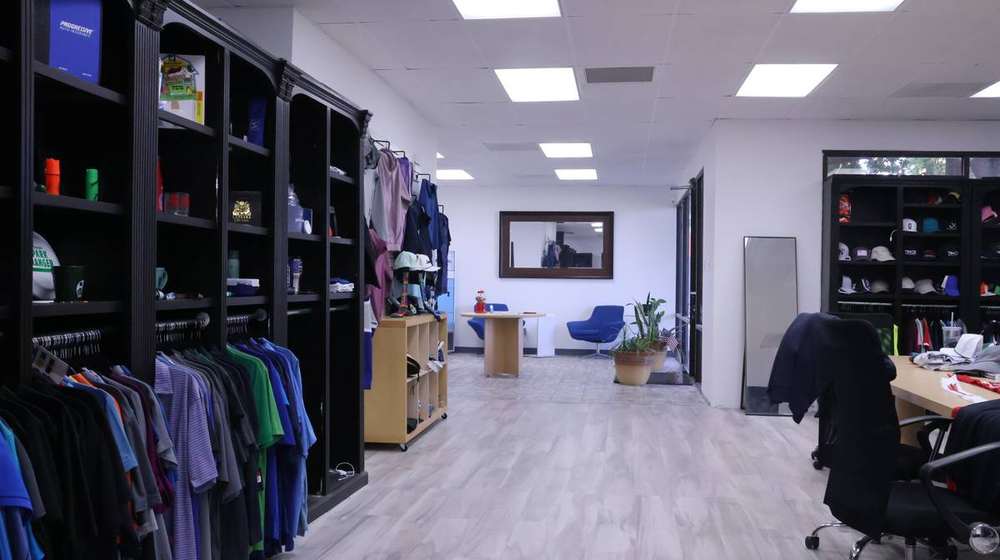
Precision Graphics has printed and decorated apparel at 1715 W. 4th Street in Tempe since 1981. Screen printing, DTF printing, embroidery and patches all happen in the same building, along with a showroom where you can see garments and samples. That means the person who quotes your job can walk over to production and check on it.
We serve the Phoenix area from our Tempe shop, and we ship anywhere in the U.S. Customers in other states order the same way local customers do: send art and sizes, approve the proof by email and choose shipping.
Find Screen Printing Near You
If you are in the Valley and want to visit the shop or pick up in person, start with screen printing near me or screen printing in Tempe. For city pages, see Phoenix screen printing, screen printing in Mesa and screen printing in Scottsdale, all served from our Tempe shop.
Ordering from elsewhere in Arizona? See screen printing in Arizona for how statewide orders work. For a closer look at how we run jobs, visit screen printing services and custom screen printing.
Screen Printing: Questions, Answered
More Screen Printing Pages And Guides
Ready For Your Screen Printing?
T-shirts, hoodies, team shirts, work shirts and tote bags screen printed in our Tempe shop, with art help, a digital proof on every order and pickup or shipping anywhere in the U.S.
